Stem cell transplants and graft-versus-host disease (GVHD)
Stem-cell transplantation can involve a patient’s own cells or donated cells. Understanding that distinction helps explain why graft-versus-host disease is discussed during some transplant journeys.
Direct answer
A blood-forming stem cell transplant helps restore the body's ability to make blood cells after preparatory treatment and is used for selected blood cancers and other conditions. The cells may come from the patient (autologous) or a donor (allogeneic). After a donor transplant, immune cells from the graft may recognize the recipient's tissues as foreign and attack them. This complication is called graft-versus-host disease (GVHD). Not everyone develops GVHD, and neither symptoms nor the number of days since transplant can establish the diagnosis without the transplant team's assessment.
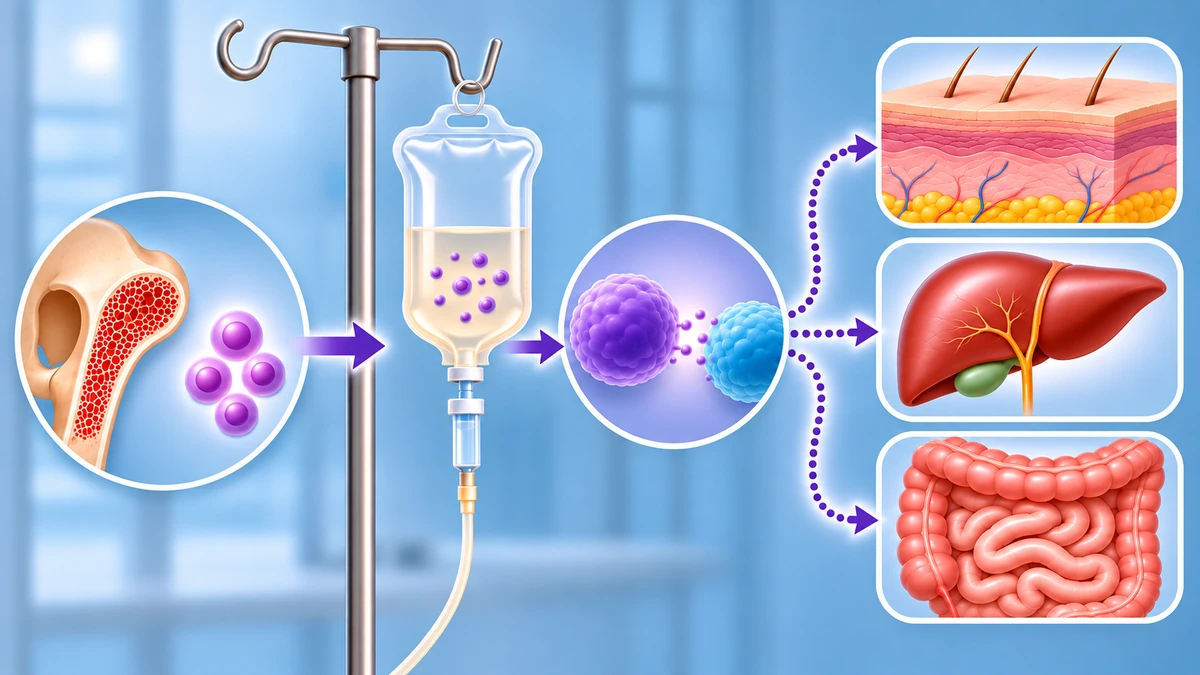
What does a transplant do?
The team selects a preparatory approach and gives the stem cells, followed by a period of recovery and close follow-up. Purpose, timing and monitoring differ according to the disease and the transplant plan. This is an overview, not a patient-specific procedure or schedule.
Own cells versus donor cells
This table cannot tell any individual which transplant is appropriate.
| Question | Autologous | Allogeneic |
|---|---|---|
| Where do the cells come from? | The patient's previously collected cells | A donor |
| Immune-cell effect | No outside donor immune cells | Donor immune cells may contribute to an anti-cancer effect |
| Conventional donor-cell GVHD | Not the same donor-derived mechanism | Possible, but not inevitable |
Graft-versus-tumor is not GVHD
Donor immune cells may recognize and attack residual cancer cells, a potentially helpful graft-versus-tumor effect. GVHD instead means injury to healthy recipient tissues. The potential benefit does not make GVHD necessary or desirable.
Which organs can be affected?
Possible findings include skin changes or rash; diarrhea or other gastrointestinal symptoms; liver abnormalities; and, in some cases, problems affecting the mouth, eyes, lungs or other organs. These signs have many possible causes after transplantation, including infections and treatment effects. GVHD is classified using clinical features and specialist assessment; a simple 100-day or three-month cutoff is not a self-diagnosis tool.
What remains uncertain?
The same symptoms may have several causes after transplant. This page cannot determine an individual cause, severity or GVHD subtype; the transplant team assesses the clinical context and appropriate tests.
When should someone call the transplant team?
Report new or unusual symptoms promptly, especially a new rash, persistent diarrhea, jaundice, significant eye or mouth problems, or breathing changes. For fever, suspected infection, severe symptoms or deterioration, follow the transplant center's urgent instructions instead of waiting for a routine appointment.
Questions for the team
Which type of transplant did I receive? Which symptoms should I report the same day? Which contact number is used after hours? How will the team assess changes after discharge? What follow-up schedule applies to my plan?
Institutional sources
General education only; not individual transplant eligibility, donor selection, GVHD diagnosis or medication/dose instructions. No independently licensed clinician review is claimed for this draft.
Editorial and evidence review
The Cancer Section Editorial Team of Reffaq Scientific Health Magazine prepared this page and reviewed its evidence by comparing claims with trusted medical and scientific sources, using AI to assist research and comparison under Reffaq editorial oversight. This is editorial evidence review, not review by a licensed physician. If documented human medical review occurs, we clearly identify the reviewer, credentials and scope.
Who we are and how Cancer section of Reffaq Scientific Health Magazine content is prepared